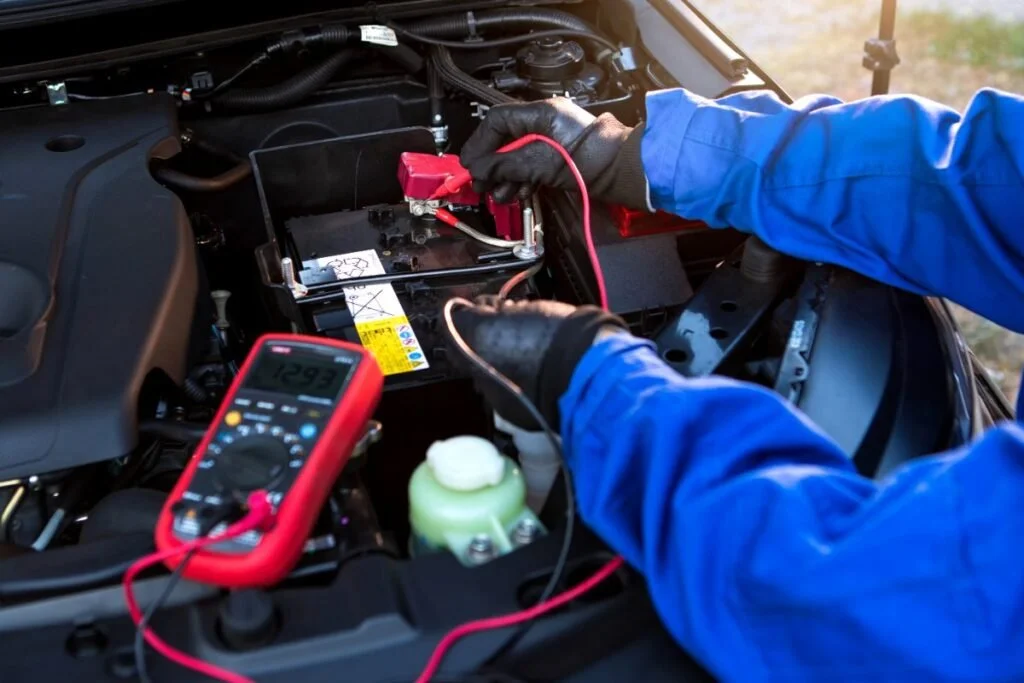


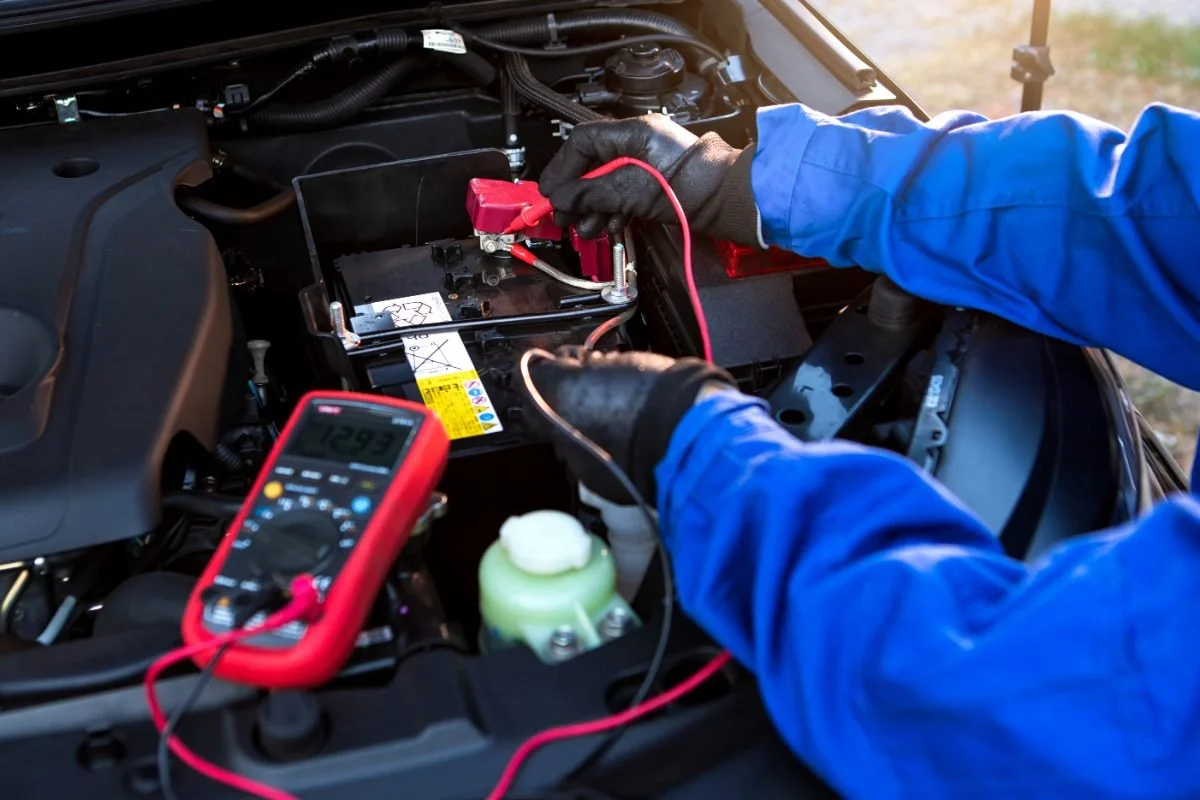
The rainy season is often synonymous with startup problems for automobiles. The culprit is the low temperatures and humidity that put a strain on car batteries. The multimeter, this versatile and indispensable tool, can help you identify the cause of the problems and find solutions quickly. In this article, we'll see how. Use a multimeter to diagnose battery problems car.

Basic principles of the multimeter
THE multimeter A multimeter is a measuring instrument used to check several electrical quantities, such as voltage, current, and resistance. There are two types of multimeters:
- Analog multimeters: they have a dial and a needle to indicate the measured values.
- Digital multimeters: they have a digital screen that directly displays the measured values.
Battery voltage measurement
The first step in diagnosing a car battery problem is to measure its blood pressure using a multimeter. Here's how to do it:
- Make sure your car's engine is off and all electrical accessories (headlights, car radio, air conditioning, etc.) are switched off.
- Set your multimeter to the "VDC" (direct current voltage) position and choose a suitable measurement range (usually 20 volts).
- Connect the red probe of the multimeter to the positive (+) terminal of the battery and the black probe to the negative (-) terminal.
- Read the voltage value displayed on the multimeter screen. A battery in good condition should have a voltage between 12.4 and 12.7 volts when at rest.
Note : If you have any doubts about the state of charge of your battery before taking this measurement, it is best to fully charge it using a suitable charger.
Voltage too low: what to do?
If the battery voltage If the voltage is below 12.4 volts, it means the battery is discharged or faulty. In this case, several factors could be the cause:
- Excessive energy consumption due to electrical accessories and lighting
- A faulty alternator that is not properly charging the battery
- An electrical circuit exhibiting abnormal resistance
- A battery that is too old or simply faulty
You will then need to conduct further investigations to identify the exact cause and find a suitable remedy, including:
- Check that the alternator is working properly.
- Recharge the battery using a specific charger
- Replace the battery if it is faulty or too old
Starting current measurement
THE starting current required The cost of starting your car's engine in winter may be higher than in other seasons. To check if your battery is providing enough current to start the vehicle, you need to measure the starting current using a multimeter equipped with a clamp meter. Here's how to proceed:
- Set your multimeter to "ADC" (alternating current) mode with an appropriate scale (usually 200 or 500 A).
- Open the ammeter clamp and wrap the jumper cable connected to the positive (+) terminal of the battery.
- Ask an assistant to turn the ignition on and operate the starter for a few seconds.
- Note the current value displayed on the multimeter screen during the startup procedure.
Attention : It is important not to operate the starter for more than 15 seconds at a time to avoid damaging it.

Current too weak: what to do?
If the value of starting current If the measured voltage is lower than the nominal capacity indicated on your battery (expressed in amps or "A"), it means it is not providing enough power to start your vehicle in winter conditions. Several factors can explain this problem:
- Insufficient battery charge
- A fault in the connection cables or terminals
- A faulty starter motor
To solve these problems, you can:
- Fully recharge the battery and perform another starting current test. You can use a booster to start your vehicle.
- Check and clean the battery cables and terminals
- Have your starter motor inspected by an automotive professional.
Preventive battery maintenance during the rainy season
For to avoid starting problems during the rainy season, It is recommended to perform some preventative maintenance on your battery:
- Clean the terminals and cables regularly with a wire brush and protect them with a specific product (dielectric grease, anti-corrosion spray, etc.).
- Check the battery condition and voltage at least once a month using a multimeter.
- Ensure that the charging system (alternator, voltage regulator, fuses…) is functioning correctly.
- Avoid very short journeys that do not allow the alternator to sufficiently recharge the battery.
For more information on maintenance and choosing a battery suitable for your vehicle, do not hesitate to consult an automotive professional or specialists such as KAS Trucks Sarl, which offers superior quality batteries in 75ah, 92ah, 180ah and 225ah and can help you select the best option to meet your specific needs.